

Chorus AI pricing starts with ZoomInfo. ZoomInfo acquired Chorus for $575M in 2021, and the product now makes the most sense when you evaluate it as part of that broader revenue-data stack. Chorus.ai review
For teams buying Chorus on its own, the standalone estimate is about $100 per user per month. Chorus.ai review That price only tells part of the story. The bigger question is whether your team needs a conversation intelligence tool, a ZoomInfo add-on, or a standalone platform built around coaching and deal inspection.
Chorus records sales calls, transcribes them, and gives managers a place to review what happened in customer conversations. It can help reps revisit commitments, managers coach to specific moments, and revenue leaders see whether the sales process described in the forecast matches what buyers are saying.
Teams already deep in ZoomInfo have the cleanest case for buying it. They can keep prospecting data, account research, and conversation data closer together. Teams shopping for a category leader on conversation intelligence alone should spend more time comparing Chorus with Gong before they sign anything.
TLDR
ZoomInfo acquired Chorus for $575M in 2021, making Chorus a stronger fit for existing ZoomInfo customers. Chorus.ai review Standalone pricing is estimated at about $100 per user per month. Chorus.ai review Gong remains the harder comparison for teams buying conversation intelligence on its own.
Key Takeaways
- Chorus works best when ZoomInfo is already part of your revenue stack.
- The standalone estimate is about $100 per user per month. Chorus.ai review
- Call recording and coaching are the core jobs Chorus does well.
- Gong is the stronger standalone comparison for teams prioritizing AI depth and market adoption.
- Procurement should evaluate the bundle, rather than just a per-user estimate.
Chorus AI Pricing and ZoomInfo Packaging
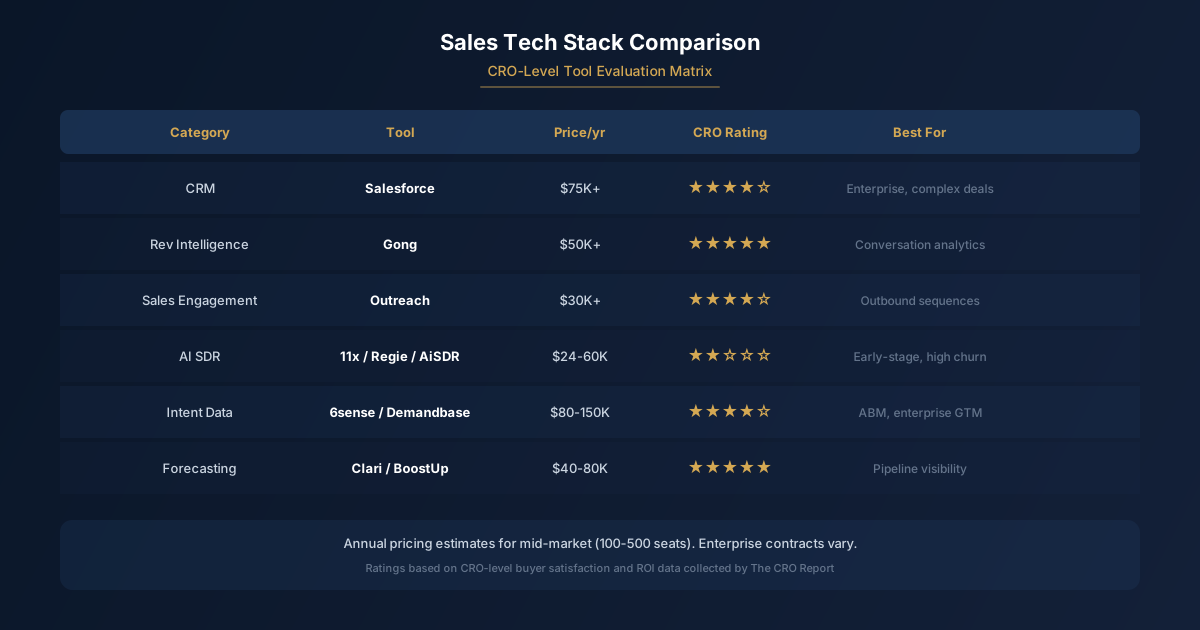
Chorus pricing is less transparent than buyers usually want from a software purchase. ZoomInfo tends to sell the broader platform through contracts and packages, which means the final bill depends on the rest of the relationship. That can be frustrating during evaluation, but it also reflects how ZoomInfo wants the product used: alongside contact data, account intelligence, and seller workflows.
The standalone estimate is about $100 per user per month. Chorus.ai review Treat that as a planning figure, not a quote you can take to procurement. Your actual cost may depend on seats, contract length, other ZoomInfo products, and how much room the vendor sees in the account.
This is where buyers can get tripped up. A standalone conversation intelligence evaluation asks whether Chorus is the best tool for recording, coaching, and deal review. A bundled evaluation asks whether the combined ZoomInfo relationship gives your team enough value to justify one larger commercial commitment.
Those are different decisions.
A revenue leader with an existing ZoomInfo contract should ask whether Chorus closes a real workflow gap. If managers are coaching from memory, reps are losing call context after handoffs, or leaders are running forecast calls with no evidence from buyer conversations, Chorus has a direct job to do. The product can make the ZoomInfo relationship more useful for the people already paying for it.
A team without ZoomInfo faces a tougher comparison. Chorus may still be a fit, but the bundle creates a decision that reaches beyond conversation intelligence. You are also evaluating ZoomInfo's data, its integrations, your current prospecting workflow, and the commercial shape of a larger vendor relationship.
That can be a good trade. It can also turn a focused software purchase into a much bigger buying process.
Chorus has a 4.5/5 G2 rating and 2,900+ reviews, which gives buyers a substantial body of user feedback to read before committing. Chorus.ai review Reviews are most useful when you filter for teams that resemble yours: sales-led organizations, manager-heavy teams, complex deal cycles, or environments where call review is part of the operating rhythm.
The practical pricing question is beyond whether about $100 per user per month feels cheap or expensive. Chorus.ai review It is whether a rep, manager, and revenue leader will each use the resulting call data often enough to change how the team sells.
If only sales enablement logs in, the tool becomes an expensive archive. If managers use it to coach and reps use it to prepare for follow-ups, it becomes part of the sales floor.
What Chorus Does for Call Recording and Coaching
Chorus is conversation intelligence software. It captures customer conversations, turns them into searchable records, and gives teams a way to examine what happened after the call ends.
The recording layer is the obvious starting point. Reps do not need to rely on hurried notes or a half-remembered recap. Customer language, objections, stakeholder concerns, and next steps can be reviewed after the fact. That makes handoffs less dependent on who happened to attend the meeting.
The coaching layer is where most teams earn the budget back. A manager can review a call with a rep and point to a specific moment: the discovery question that got skipped, the objection that went unanswered, the competitor mention that should have changed the follow-up. Coaching gets more concrete when the conversation is available.
This also changes how new reps ramp. Instead of hearing generic advice about discovery or qualification, they can review calls that show the company's actual motion. They can hear how experienced reps frame a difficult topic, how buyers describe their problems, and where a conversation tends to fall apart.
That is useful only if the team has a coaching habit. Software cannot create one for you.
Chorus can also help leaders inspect deal quality. A forecast is an internal view of the pipeline. Customer conversations are evidence from the other side of the deal. When those two stories do not match, managers have a reason to ask better questions before the quarter gets away from them.
The product is strongest when it supports a clear operating behavior:
| Buyer group | What they need from Chorus | Typical use |
|---|---|---|
| Revenue leader | Better visibility into deal quality | Review risk and inspect forecast claims |
| Sales manager | Specific evidence for coaching | Review calls and coach against real moments |
| Frontline seller | Context after customer meetings | Prepare follow-ups and preserve account history |
| Enablement leader | Reusable examples of good selling | Build training from real customer conversations |
| Operations team | Reliable conversation data | Connect call activity with the broader revenue workflow |
The table also explains why seat count can become a procurement argument. Some organizations buy only for quota-carrying reps and managers. Others include enablement, customer success, or executive sponsors. The right scope depends on who needs the conversation record to do their work.
A narrow rollout can validate adoption. A broader rollout gives more people access to the same customer truth. Neither choice is automatically better. The important part is matching access to a workflow that already exists.
For a wider category view, conversation intelligence tools are worth comparing alongside Chorus's 4.5/5 G2 rating and 2,900+ reviews. Chorus.ai review The product category has matured enough that feature checklists rarely settle the decision on their own.
Your sales culture does.
Teams that already record calls and coach consistently will get value faster. Teams hoping software will force managers to coach may be disappointed. The call library fills up either way. The difference is whether anyone uses it to change behavior.
Chorus Versus Gong Buyer Fit
Gong is the comparison that comes up most often because both products sit in the same part of the revenue stack. Both help teams capture conversations, review calls, coach sellers, and understand deals with more evidence than CRM fields alone.
The difference is in buyer fit.
Chorus has a natural advantage for teams already committed to ZoomInfo. ZoomInfo acquired Chorus for $575M in 2021, and that ownership matters because Chorus can be evaluated as part of a connected revenue-data relationship. Chorus.ai review If ZoomInfo is already where your sellers research accounts and contacts, adding conversation intelligence from the same vendor can reduce procurement friction and create a more coherent stack.
Gong has more independent market mindshare in conversation intelligence. Buyers often start with Gong when they want the category leader, a deeper AI story, or a product whose identity is centered on analyzing revenue conversations. That does not make Chorus a weak tool. It makes the standalone comparison harder.
A clean way to frame the choice:
Chorus fits a ZoomInfo-centered revenue organization that wants conversation intelligence without bringing in another major vendor. The economic case improves if the same team can connect prospecting, account context, and call review in day-to-day work.
Gong fits an organization willing to buy the conversation intelligence layer on its own merits. That buyer is usually more focused on how deeply the platform supports coaching, deal inspection, and AI-driven analysis than on whether it extends an existing data subscription.
The loser in this comparison is the buyer who treats both products as interchangeable. They are close enough to trigger a serious evaluation, but the vendor context changes the decision.
Chorus has 1,000+ customers, so it is not a fringe add-on looking for a use case. Chorus.ai review There is a meaningful installed base behind the product. Still, customer scale is not the same thing as category leadership, and it should not be used as a substitute for seeing how each platform handles your own calls.
Run both vendors through the same test. Give them the same sales scenarios, the same manager workflows, and the same questions about implementation. Ask a manager to find a missed objection. Ask an executive to assess whether a late-stage deal has real buyer support. Ask a rep how quickly they can get from a call recording to a useful follow-up.
The answers will tell you more than a polished demo.
Your current stack should shape the comparison too. A team using ZoomInfo may value vendor consolidation. A team already happy with separate prospecting and intelligence tools may prefer the specialist route. Neither choice deserves a blanket recommendation.
The pricing conversation should remain attached to the operating model. About $100 per user per month can be sensible if the product is used by the people making coaching and forecast decisions. Chorus.ai review It is harder to defend when the platform becomes a passive recording repository.
The more expensive mistake is buying the wrong platform because its demo looked familiar.
Company Context and Customer Scale
Chorus became part of ZoomInfo when ZoomInfo acquired the company for $575M in 2021. Chorus.ai review That acquisition explains the product's current posture in the market. Chorus is still conversation intelligence, but it now sits inside a much larger revenue intelligence company.
For some buyers, that is the whole appeal. They want fewer vendors, fewer integrations to manage, and a sales stack organized around a common data provider. Chorus gives ZoomInfo customers a path to add call recording and coaching without resetting the rest of their workflow.
For other buyers, the ZoomInfo relationship raises a fair concern: will Chorus get the same product attention as a standalone category leader? That question is worth asking during evaluation. Product roadmaps, integrations, AI features, support structure, and commercial packaging all matter when a specialist product becomes part of a larger platform.
Chorus has 1,000+ customers and 2,900+ reviews alongside its 4.5/5 G2 rating. Chorus.ai review Those figures show that the product has scale and a large enough user base to produce useful market feedback.
Read the reviews with a purpose. Look for patterns in adoption, manager usage, call quality, implementation effort, and support. A generic positive review will not help much. A review from a revenue leader who runs a similar sales motion might.
Company context also matters in vendor negotiations. Existing ZoomInfo customers may have more room to discuss packaging because Chorus is part of a broader account relationship. New buyers may have to decide whether they want that relationship at all.
If your team is already comparing adjacent tools, HubSpot pricing becomes relevant beside Chorus's estimated about $100 per user per month price. Chorus.ai review Revenue software costs pile up when each system solves a narrow problem with no shared workflow.
The same logic applies to outbound tooling. LinkedIn Sales Navigator review can sit beside ZoomInfo and Chorus in the same buying conversation because ZoomInfo acquired Chorus for $575M in 2021. Chorus.ai review The strongest stack is not the one with the most logos. It is the one your sellers will use without creating duplicate research, duplicate notes, and duplicate process.
Chorus wins when ZoomInfo is already central to how your team finds and works accounts. The product adds a conversation layer to a system your sellers know.
Gong wins more often when the buying decision starts and ends with conversation intelligence. Its category position gives it the stronger default case for buyers who want the specialist.
Can Chorus become the better standalone pick for your team? It can, but the vendor bundle has to create an advantage your managers and reps can feel after the contract is signed.
Sources
- Chorus.ai review and $575M
- Chorus.ai review and 4.5/5
- Chorus.ai review and 2,900+ reviews
- Chorus.ai review and 1,000+ customers
- Chorus.ai review and about $100 per user per month
Get Weekly Tool Reviews
Honest assessments of GTM tools from people who've actually used them.
Subscribe to The CRO Report →No spam. No vendor sponsorships. Just practical insights for revenue leaders.