Gong pricing includes platform fees, per-user licenses, and paid modules. See what sales leaders should budget for call coaching and forecasting.
Gong pricing starts with a platform fee, then adds per-user licenses and optional modules. That structure makes sense for sales leaders buying conversation intelligence across a team, but it also makes a quick price comparison harder than it should be.
The main decision is straightforward. Gong earns its keep when managers need better evidence from sales calls: what reps said, where a deal stalled, which objections keep appearing, and whether coaching is changing behavior. Buyers looking primarily for forecasting should put more weight on that part of their evaluation.
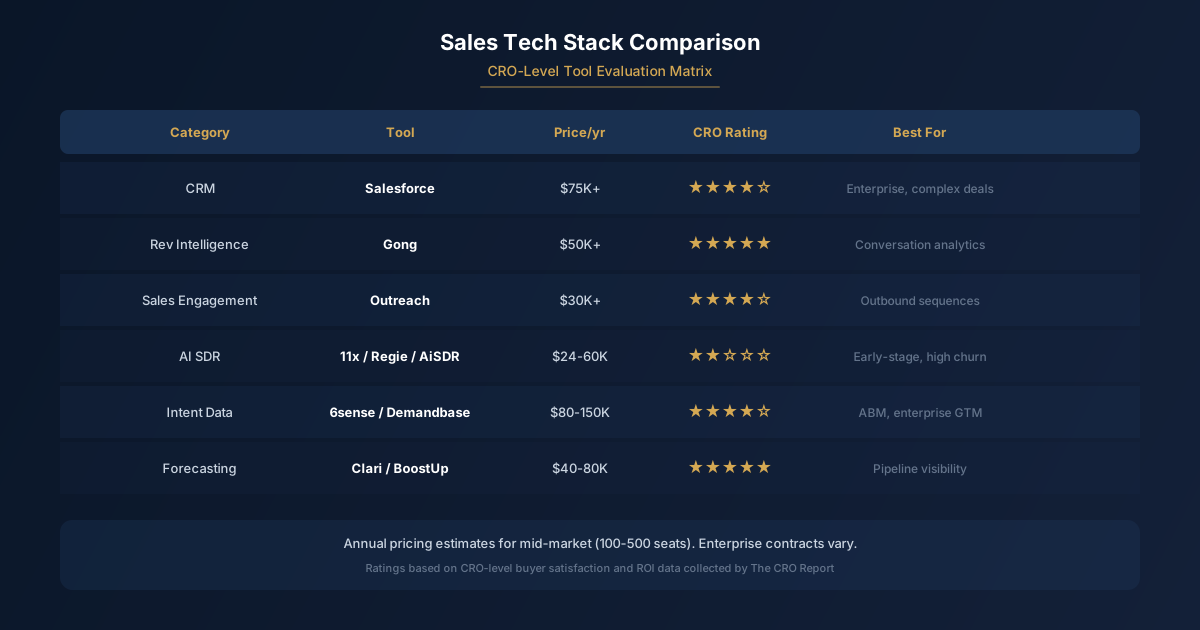
Gong's platform fee is listed at $5,000 to $50,000 per year. Related analysis Core conversation intelligence licenses are listed at $1,360 to $1,920 per user per year. Related analysis
That gives you the two costs that shape the base purchase. The platform fee establishes the account. The licenses determine how expensive broad adoption becomes.
A useful Gong budget starts with the platform fee, then works outward. Gong's platform fee is listed at $5,000 to $50,000 per year. Related analysis That is a meaningful fixed cost for a smaller sales organization, while a larger rollout will feel the per-user licenses more sharply.
Core conversation intelligence licenses are listed at $1,360 to $1,920 per user per year. Related analysis This is the recurring spend tied to the people whose calls, meetings, and deal activity will live inside the product.
The annual license figure is the cleanest starting point for comparing Gong with other conversation intelligence software. It tells you what the core product costs before outreach, forecasting, or a broader revenue stack enters the conversation.
Gong sells in an enterprise-style motion. Expect the commercial discussion to cover who needs a license, what data sources will connect, which modules matter now, and how long the agreement will run. The contract length deserves attention because conversation intelligence becomes embedded in manager workflows quickly. Switching later means moving recordings, rebuilding reports, retraining managers, and asking reps to change habits again.
That does not make a longer term wrong. It makes the scope decision worth getting right before the signature. Sales leadership should decide whether Gong is being purchased for every seller, a leadership group, a revenue operations team, or a focused group with a clear coaching problem.
| Team role | Core reason to use Gong | License priority |
|---|---|---|
| Frontline seller | Review calls, improve discovery, capture objections | High |
| Sales manager | Coach against recordings and inspect deal quality | High |
| Revenue operations leader | Review deal patterns and pipeline evidence | Medium |
| Executive sponsor | Inspect strategic deals and team behavior | Medium |
| Occasional stakeholder | Read a recap or join deal review | n/a |
This table is more useful than treating every seat as identical. A frontline seller and a manager may both need regular access, but they use the product for different jobs. A leader who only joins high-stakes deal reviews may not need the same depth of access.
The license count should follow the workflow. Start with the people who need to review calls every week, coach from evidence, and act on deal signals. Expanding access later is easier than paying for a broad rollout that never becomes part of the operating rhythm.
Gong Engage is listed at $50 to $100 per user per month. Related analysis Gong Forecast is listed at $50 to $80 per user per month. Related analysis Those modules can move the budget far beyond the core conversation intelligence purchase.
A full bundle is listed at about $250 per user per month. Related analysis Sales leaders comparing a bundled deployment with adjacent tools can also review GTM tools and reviews alongside the $250 per user per month figure.
The practical question is which problems deserve to be solved in one platform. A team with weak call coaching may get immediate value from the core product. A team with a mature outreach tool and a separate forecasting process should avoid buying modules merely because they sit under the same logo.
Gong records, transcribes, and analyzes sales calls. Its value comes from turning conversations into material a manager can inspect, coach from, and compare across the team.
That sounds simple because the underlying job is simple. Sales leaders want to know what happened after a rep marks an opportunity as qualified. Did the buyer describe a real problem? Did the rep ask enough questions? Did the champion introduce a competitor? Did the next step have an owner and a date?
CRM fields can answer some of that, assuming they are updated. A call recording gives managers the source material. The transcript makes it searchable. The analysis layer helps them find patterns across deals without listening to every minute of every conversation.
This is where Gong has its strongest case. Coaching based on recorded calls is more concrete than coaching based on a manager's recollection. A manager can point to the moment a rep skipped discovery, talked through an objection, or failed to establish urgency. The conversation is right there.
Call libraries also create a better onboarding environment. New reps can study how experienced sellers handle a difficult use case, position a product against a competitor, or recover when a buyer pushes on price. Managers can build a set of examples around the skills they want to reinforce.
Trackers add another layer. Teams can watch for recurring words, topics, competitor mentions, and customer concerns. A sales leader might notice that buyers keep raising an integration question that the product marketing team has barely addressed. Or a manager might find that a rep team loses momentum whenever procurement enters the call.
The point is not to turn every sales conversation into a surveillance project. That approach gets old fast and reps will treat the tool as a trap. Gong works when the organization uses the evidence to improve deal quality, coaching quality, and buyer understanding.
The best implementation has a clear manager habit behind it. Managers review a selected group of calls. They bring specific examples to one-on-ones. They identify repeatable behaviors. Reps can see why the feedback exists and what to do differently on the next call.
A call-coaching program without that follow-through produces a large archive of recordings and very little improvement. The software cannot create management discipline for you.
Gong fits best after calls have become too numerous and too important for informal review. A founder-led team can often learn from direct involvement in sales conversations. A growing sales organization needs a way to preserve that visibility without requiring every leader to attend every meeting.
The product also helps when pipeline inspection has become too dependent on rep narration. A forecast call can sound healthy until someone opens the underlying conversations and finds a buyer who never confirmed a timeline, a champion who lacks authority, or a next step that was more hopeful than real.
Conversation intelligence gives sales managers a way to inspect the quality behind pipeline labels. It can expose gaps in discovery, weak mutual action plans, competitor pressure, pricing friction, and unclear ownership.
That makes Gong valuable to teams with a serious coaching culture. If managers review calls, use a common sales methodology, and have the authority to improve rep behavior, the data has somewhere to go.
Teams without those habits may still enjoy the transcripts and recordings, but the purchase becomes harder to justify. The software can show the problem. Someone still has to own the correction.
Gong's base platform fee is listed at $5,000 to $50,000 per year. Related analysis For a small team, that fixed cost raises the bar for proving that call visibility will change how managers coach or how leadership qualifies pipeline.
The core license cost also affects deployment design. Core conversation intelligence licenses are listed at $1,360 to $1,920 per user per year. Related analysis A targeted rollout can make sense when a sales leader wants to establish manager habits before expanding access.
The product is less compelling when the need is only basic call recording. Plenty of meeting tools can create a recording and transcript. Gong earns its price when the organization will use that material in a repeatable revenue process.
Forecasting is the area where buyers should slow down. Gong can bring call evidence into pipeline reviews, which is useful. Call signals can make a forecast discussion less dependent on optimistic rep updates. That does not automatically make Gong the best forecasting system for every revenue organization.
Dedicated forecasting products often have a different center of gravity. They focus on forecast categories, pipeline coverage, rollups, historical performance, scenario planning, and executive reporting. Gong's core strength remains conversation intelligence and coaching.
A sales leader evaluating Gong Forecast should ask whether the team needs more evidence from calls or a more specialized forecasting workflow. The answer may be both, but each job should be tested separately.
Gong Forecast is listed at $50 to $80 per user per month. Related analysis That is enough incremental cost to require a defined use case, an owner, and a clear alternative.
Look closely at what your managers do during forecast review. If they need to inspect buyer language, hear a key objection, and verify that a rep earned confidence, Gong has a strong role. If they spend their time modeling coverage, assessing commit quality across segments, and reporting to finance, a dedicated forecast product may have the edge.
Gong Engage is listed at $50 to $100 per user per month. Related analysis Outreach software is a separate buying category with its own adoption risk, data requirements, and workflow design. Teams comparing sales engagement products can use the $50 to $100 per user per month figure alongside Salesloft versus Apollo.
A full bundle is listed at about $250 per user per month. Related analysis At that level, Gong is no longer a narrow call-coaching purchase. It is part of a larger decision about how much of the revenue workflow should sit in one vendor's product family.
One vendor can reduce integration work and simplify accountability. It can also create a larger commitment around tools that solve different problems. The right answer depends on whether the team already has trusted systems for engagement and forecasting.
Choose Gong when sales conversations are a primary source of truth and your managers are prepared to use them.
It is a strong fit for teams that need to improve discovery, build a repeatable coaching process, inspect deal quality, and understand what buyers say when leadership is not in the room. It also fits organizations that need a searchable record of calls across a growing sales team.
The product becomes more appealing when the cost of a weak deal review is high. Complex sales cycles, multiple stakeholders, competitive pressure, and long evaluation periods create plenty of opportunities for a deal to look healthier in the CRM than it is in the conversation.
Gong is also useful when product marketing and sales leadership need a better view of customer language. Competitor mentions, objections, pricing concerns, and feature requests often appear in calls before they appear in a formal report. A team that can review those patterns has a better chance of responding before the issue becomes widespread.
Be more cautious when the team lacks manager capacity for coaching. Buying a sophisticated call intelligence platform without a review rhythm is like buying a well-equipped gym and leaving the membership card in a drawer. The product may be capable. The behavior never changes.
Be equally cautious when forecasting is the main reason for the purchase. Gong Forecast is listed at $50 to $80 per user per month. Related analysis Evaluate it against dedicated forecasting options using your real pipeline process, not a generic demo.
Buyers who only need a lighter sales engagement product may find a better fit in another category. Gong Engage is listed at $50 to $100 per user per month. Related analysis A team assessing lower-cost engagement software can compare that range with the Reply.io review.
The strongest Gong buyer has a clear answer to three questions. Which calls deserve review? Which managers will coach from them? Which decisions will improve because the team can hear the buyer's actual words?
If those answers are vague, the contract will be expensive shelfware. If they are specific, Gong can become part of how the sales organization learns.
The CRO Report delivers honest assessments of GTM tools from a practitioner perspective.
Subscribe to The CRO Report Browse All Tool Reviews