
TLDR
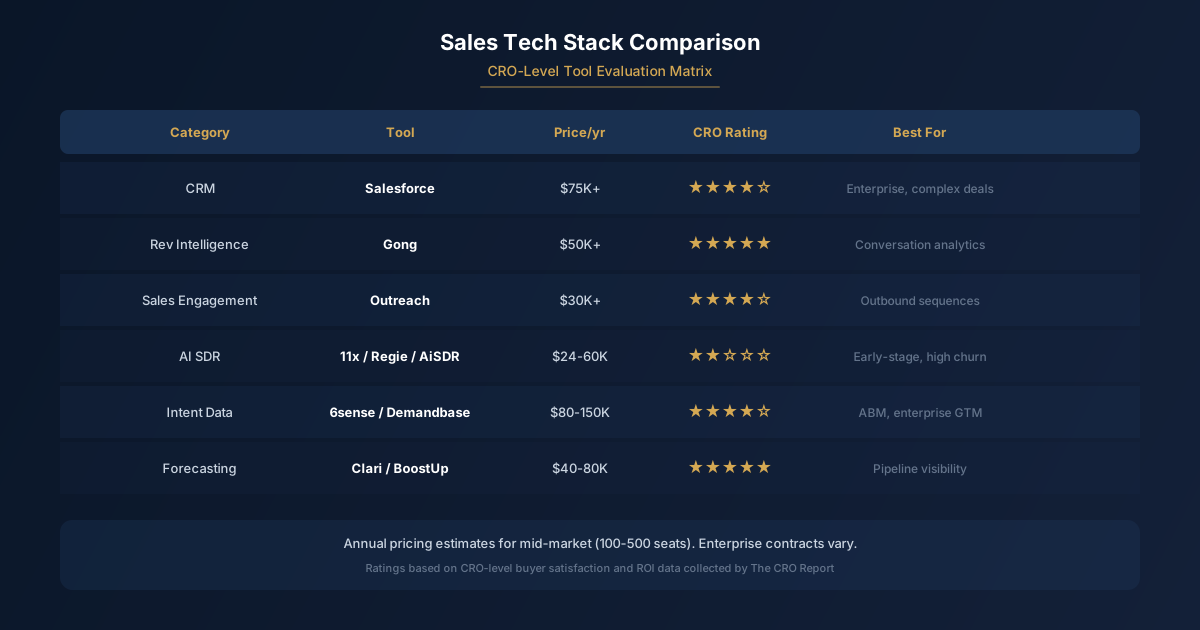
Outreach does not publish a standard rate card. It can earn the spend for Salesforce-heavy sales organizations with complex outbound operations. Teams with simpler motions should compare Salesloft and lighter platforms before signing a long enterprise contract.
The useful budget number is the complete team-level quote, not an unverified per-seat estimate. Ask Outreach to separate base licenses, optional products, voice usage, implementation, support, services, and renewal increases.
Outreach is the Salesforce of sales engagement. It suits revenue organizations with complicated outbound motions, Salesforce dependencies, governance requirements, and someone on the team who owns the system. It can feel like a money pit when the motion is simple and the team needs reps sending emails this week.
Company Overview
Understanding who built the product and their trajectory helps evaluate long-term viability.
The Outreach Story
Founded in Seattle, Outreach helped establish the sales engagement category and built its platform around structured seller workflows.
Outreach positions the product for enterprise sales workflows and Salesforce-connected operations. The company says 6,000 global customers use the platform.
The company has continued investing in AI and conversation intelligence through Kaia, including summaries, coaching, recording workflows, and access to call data.
What Outreach Actually Costs
Outreach does not publish a standard public rate card. Verify every component in the vendor quote.
What You'll Actually Pay
Outreach does not publish a standard public rate card. Enterprise buyers receive a custom quote based on seats, products, implementation needs, contract length, and the negotiating mood on the other side of the table.
Do not treat third-party per-user estimates as a current price. The authoritative number is the dated written quote for your seat count, modules, services, usage, term, and renewal conditions.
| Component | Price status | Notes |
|---|---|---|
| Base Platform | Custom quote | Core sequencing, email + phone |
| Engage (Full Suite) | Confirm included products | All channels + advanced automation |
| Kaia (Conv. Intelligence) | Confirm as a separate line item | Call recording, transcription, AI insights |
| Commit (Forecasting) | Custom pricing | Deal inspection, revenue forecasting |
| Implementation | Custom quote | Scope, migration, enablement, and timeline |
| Minimum Contract | Verify in quote | Confirm term, renewal cap, and exit terms |
Kaia changes the economics when it is priced separately. For a team that reviews calls, coaches reps, and needs a shared record of what happened in a deal, the module can be defensible. For a team that already has conversation intelligence under contract, it is an obvious place to push back.
Implementation deserves its own budget line. A cheap license paired with a messy rollout is still expensive. Outreach affects rep workflows, CRM hygiene, sequence governance, call data, reporting, permissions, and manager behavior. Somebody has to define success before the tool starts enforcing the process.
Cost Comparison Context
The annual team quote makes the buying decision clearer. Compare it with headcount productivity, stack consolidation, and the time sales operations currently spends fixing inconsistent activity data. Model the first year and renewal years separately.
The trap is treating Outreach as a rep productivity purchase. It is usually an operating-model purchase. If leadership wants standardized outbound, clean Salesforce activity, coaching data, and controlled workflows across a large sales organization, the price has a logic. If leadership only wants better email sequences, the contract will feel heavy.
Outreach Review: Where the Platform Earns Its Price
Outreach built its reputation around high-volume, multi-touch outbound and has expanded into deal, pipeline, forecasting, and conversation-intelligence workflows.
The product is strongest when a sales organization needs discipline at scale. Reps can work structured sequences. Managers can inspect activity and pipeline behavior. Operations can define controls rather than relying on every rep to build their own process from scratch.
That control has a cost beyond the invoice. Outreach needs ownership. Someone must manage sequence standards, permissions, integrations, reporting definitions, onboarding, and the inevitable requests for exceptions. Sales operations teams that treat it as a plug-and-play tool tend to create a more expensive version of their existing mess.
Outreach says 6,000 global customers use its sales workflows. That is vendor-reported evidence, not an independent quality score, but a large installed base does make experienced administrators and implementation partners easier to find.
The feature set also creates a familiar enterprise software problem. More capability creates more choices. A mature revenue organization may value that flexibility because its sales process has real variation across segments, regions, and teams. A smaller organization may end up paying for a control plane it does not need.
Salesloft remains the cleaner mid-market alternative for many buyers who want a sales engagement platform without making sales operations a full-time software administration job. Read our Outreach vs Salesloft comparison before assuming the category leader is the right answer.
Core Features
What Outreach does well - and where competitors have caught up.
Multi-Channel Sequences
Industry-leading sequencing with email, phone, LinkedIn, and SMS. Sophisticated branching logic, A/B testing, and dynamic personalization. Best-in-class for complex, high-touch cadences.
Salesforce Integration
Deepest Salesforce integration in the category. Bi-directional sync, custom field mapping, and enterprise governance controls. Native to most enterprise tech stacks.
Kaia AI
Conversation intelligence with real-time transcription, talk-track analysis, and coaching cards. Good but not best-in-class - Gong still leads on pure call intelligence.
Email Deliverability
Strong deliverability tools with sending limits, domain health monitoring, and throttling. Enterprise-grade email infrastructure built for volume.
Reporting & Analytics
detailed reporting on sequence performance, rep activity, and engagement metrics. Custom dashboards and scheduled reports for leadership.
Admin & Governance
Enterprise-grade admin controls, SSO, role-based permissions, and audit logs. Built for compliance-heavy industries and large team management.
Outreach and Salesforce: Integration and Email Tracking
Outreach makes the most sense when Salesforce is the system of record and the sales team needs outreach activity to show up there in a dependable, governable way. The platform sits between a rep's daily work and the CRM record leadership uses to inspect pipeline.
That changes the conversation from "does it integrate?" to "which system owns which data?" Sales operations should define what Salesforce owns, what Outreach creates, which activities must sync, how contacts and accounts are matched, and what happens when records conflict. Leaving those decisions to default settings is how reporting becomes a late-stage cleanup project.
Email tracking is part of that operating model. Teams use it to understand rep activity and buyer engagement, but the useful outcome is consistent data in the sales process. A record of activity only helps when the organization agrees on how to interpret it. Open and engagement signals can guide follow-up. They should not become a substitute for deal judgment.
Enterprise teams should also review compliance, retention, permissioning, and data access before rollout. Those are not procurement footnotes. They decide whether managers trust the information, whether reps adopt the workflow, and whether sales operations can defend the reporting when leadership asks uncomfortable questions.
Kaia belongs in this section too. Conversation intelligence can turn calls into coaching material and surface deal context for managers who cannot listen to everything. Outreach documents current Kaia features in its 2026 product release notes. Buyers should decide whether Kaia replaces an existing call-recording product or creates another system for managers to check.
Salesforce-heavy teams often win with Outreach because they already accept administration as the price of control. The bigger question is whether the team has the internal owner who can keep the integration clean after launch.
Where Outreach Falls Short
The honest assessment every buyer needs before signing a multi-year contract.
The Complexity Tax
Outreach's greatest strength is also its biggest weakness: the platform is built for enterprise complexity, which means simpler use cases require unnecessary overhead.
Key Limitations
Steep Learning Curve
G2 rates ease of setup at 7.6/10 vs. Salesloft's 8.5/10. New reps take 2-4 weeks to become proficient. Admin training is essentially required.
Implementation Time
Enterprise deployments take 4-8 weeks. Complex integrations and workflow migration extend timelines. Fast-moving startups find this frustrating.
UI/UX Dated
Interface is functional but feels dated compared to modern competitors. Power users adapt, but casual users complain about navigation.
Price Premium
20-40% more expensive than Salesloft for comparable functionality. Value is there for enterprise, but mid-market teams often overpay.
The "Feature Bloat" Problem
Many customers report using only 30-40% of Outreach's capabilities. If you're primarily running basic email sequences, you're paying for enterprise features you'll never touch.
Pros & Cons Summary
What Works
- Best-in-class sequencing for complex sales motions
- Deepest Salesforce integration available
- Enterprise-grade security and compliance
- Massive third-party integration ecosystem
- strong email deliverability infrastructure
- Advanced A/B testing and analytics
- Scales to thousands of users
What Doesn't
- Steep learning curve for new users
- Long implementation timelines (4-8 weeks)
- Premium pricing vs. alternatives
- UI feels dated and cluttered
- Overkill for simple sales motions
- Kaia lags behind Gong for call intelligence
- Admin overhead requires dedicated resources
Decision Framework
Cut through the noise with clear guidance on when Outreach makes sense.
Buy Outreach If...
- You run 50+ person sales teams with complex workflows
- Salesforce is your source of truth (deep integration matters)
- You need enterprise security, SSO, and compliance controls
- Your sequences have 10+ touches across multiple channels
- You have RevOps resources to manage the platform
- Budget isn't the primary constraint
Skip Outreach If...
- You're a startup with <20 reps and need fast time-to-value
- Simple sequences (<5 touches) are your primary use case
- You don't have admin resources for ongoing management
- Budget is a primary concern (Salesloft is 20-30% cheaper)
- You prioritize UX over feature depth
- You use HubSpot CRM (native integration is weaker)
By Company Stage
Seed / Series A Not Recommended
Outreach is too heavy for early-stage teams. You'll spend more time configuring than selling. Consider Apollo, Instantly, or even Salesloft's simpler tiers.
Series B ($10-30M ARR) Conditional
Makes sense if you have dedicated RevOps and complex, multi-touch sequences. If you're still figuring out your sales motion, Salesloft offers faster iteration.
Series C+ / Enterprise Recommended
This is Outreach's sweet spot. At scale, the platform's depth pays off: territory management, advanced permissions, compliance controls, and enterprise integrations all matter.
Which Company Sizes Outreach Fits
Outreach fits mid-market organizations with a growing sales operations function and enterprise organizations that need governance across complicated sales motions. The dividing line is not employee count. It is operational complexity.
A mid-market team can justify Outreach when it has multiple outbound motions, several sales roles, meaningful CRM requirements, managers who coach from activity and calls, and enough volume that inconsistent sequences create real pipeline risk. The platform creates a shared process where ad hoc rep behavior used to live.
Enterprise organizations tend to get more from the full stack because their cost of inconsistency is higher. They may have separate teams, regional requirements, layered approvals, formal security review, and reporting needs that turn a lightweight sequencing tool into a source of downstream problems. Outreach gives those organizations a central place to govern sales engagement.
The product becomes over-buying when the sales motion is straightforward, the team is small enough to communicate informally, and the CRM requirements are light. A founder-led sales team or a lean commercial group may need a fast way to prospect, sequence, and track work. It may not need dedicated administration, a layered implementation, or an enterprise contract.
That is where alternatives deserve a fair look. Salesloft is often the more comfortable choice for teams prioritizing speed to value. Apollo can suit teams that want prospecting data closer to the outreach workflow, though the tradeoffs are different. Our Apollo review covers that side of the market.
Do not buy Outreach because it is familiar to a new executive or because a competitor uses it. Buy it when the sales process needs the structure it imposes. Otherwise, the platform can turn routine outbound work into an administrative project.
Alternatives to Consider
Outreach isn't the only option. Here's how key competitors stack up.
| Tool | Best For | Price Range | Key Difference |
|---|---|---|---|
| Salesloft | Mid-market, UX-focused | Custom quote | Faster implementation, better UX, now Clari-owned |
| Apollo.io | SMB, data + engagement | Verify current public plans | Built-in prospect database, aggressive pricing |
| Gong | Call-heavy teams | Custom quote | Best-in-class conversation intelligence (not SEP) |
| Groove (Clari) | Salesforce-native | Custom quote | Lives entirely in Salesforce, simpler deployment |
| HubSpot Sales Hub | HubSpot CRM users | Verify current public plans | Native if already on HubSpot; limited otherwise |
Note: With Clari's August 2025 acquisition of Salesloft, expect tighter integration between Salesloft (engagement) and Clari (forecasting). This may shift competitive dynamics significantly in 2026.
Negotiating and Consolidating Around Outreach
The best Outreach negotiation starts with a map of the current stack. List every product touching prospecting, sequencing, email activity, call intelligence, forecasting, CRM data, coaching, and reporting. Then ask which costs disappear if Outreach becomes the center of the sales engagement workflow.
Outreach can replace fragmented sequence tools and reduce the manual work of getting rep activity into Salesforce. Kaia may reduce the need for a separate conversation intelligence contract. Commit may enter the forecasting discussion. But "may" is doing a lot of work here. Product overlap is not the same as a clean replacement plan.
A stack-consolidation business case needs a named owner, migration work, and a decision about where each category of data lives. If the team keeps every old tool after signing Outreach, it has not consolidated anything. It has bought another tab.
Contract timing matters because Outreach uses custom enterprise pricing. Ask for pricing by component, not a single blended number. Separate platform licenses from Kaia, Commit, implementation, support, and any services work. That makes it easier to remove products that do not have a clear owner or use case.
Push for a phased rollout when the organization is uncertain about adoption. A full-suite deal makes sense when the buyer knows the operating model and has executive support. A smaller initial commitment is safer when the organization is still deciding whether Kaia, forecasting workflows, or advanced administration will earn their place.
Annual terms can create room for negotiation, especially when a vendor wants a clean forecast. The buyer still needs protections around renewal increases, unused seats, implementation scope, and future products. A discount on licenses does little good if the contract locks the team into add-ons it has not adopted.
Negotiation Tips
- Time your deal: End of quarter (especially Q4) yields best discounts
- Multi-year apply: 3-year commits can save 20-25%
- Bundle modules: Kaia + Engage together is cheaper than adding later
- Competitive pressure: Get Salesloft quotes - Outreach will match aggressively
- Implementation credits: Often waivable with larger deals
Outreach wins when it replaces disorder with an operating system sales leadership will actually run. Salesloft wins when the team needs a capable platform with less organizational weight. The buyer who wins is the one who treats the contract as a stack decision, not a software demo.
For a broader view of the category, compare the best sales engagement platforms before committing to an enterprise rollout.
Questions to Ask Outreach
Due diligence questions for your evaluation calls.
-
"What's included in implementation, and what costs extra?"Hidden implementation costs are common. Get specific deliverables in writing.
-
"How do you handle Salesforce sync conflicts and data integrity?"Critical for enterprise deployments. Understand failure modes before committing.
-
"What's the average time-to-productivity for a new rep?"Complexity affects ramp time. Get benchmarks from similar customers.
-
"How does Kaia compare to standalone Gong for conversation intelligence?"If call coaching is critical, you may need both. Understand capability gaps.
-
"What admin resources do customers our size typically dedicate?"Outreach requires ongoing administration. Understand the hidden labor cost.
-
"What's your product roadmap for AI features in 2026?"AI is evolving fast. Understand if Outreach is keeping pace with Salesloft, Apollo, and others.
Key Takeaways
- Outreach uses quote-based pricing, so compare complete team-level proposals.
- Treat Kaia as a separate business case when it appears as a separate line item.
- Salesforce-heavy teams with dedicated sales operations ownership are Outreach's best fit.
- Simple sales motions can end up paying for administration they do not need.
- Negotiate each product separately and tie the contract to tools you will retire.
The Bottom Line
Outreach offers a broad sales engagement feature set, and that breadth comes with administrative complexity. It fits enterprise teams with dedicated RevOps resources, multi-channel sequences, and deep Salesforce dependencies.
If that describes your organization, Outreach deserves a serious evaluation. A growing team that values speed, simplicity, and cost control should compare Salesloft and Apollo against the same documented requirements and full contract cost.
The right choice depends on where you are today and where you're headed. Don't buy tomorrow's platform for today's problems.
Sources
Get Weekly Tool Reviews
Honest assessments of GTM tools from people who've actually used them.
Subscribe to The CRO Report →No spam. No vendor sponsorships. Just practical insights for revenue leaders.